- Danville CA
Hazardous Tree Removal In Danville CA For Safe Yards
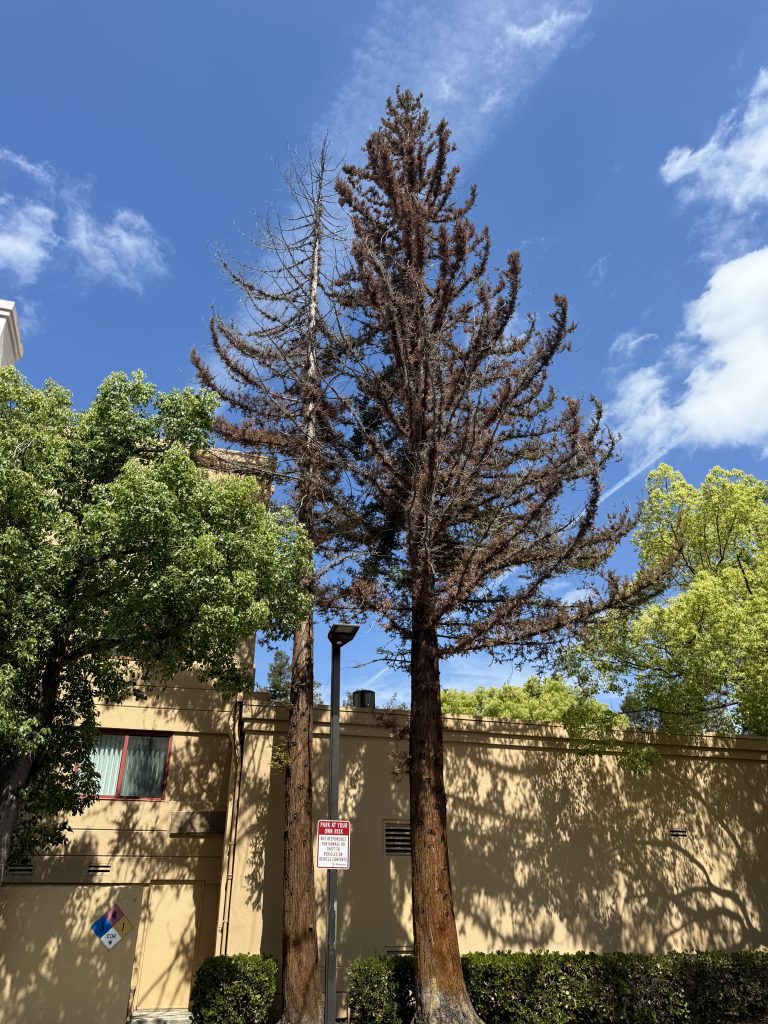
Unsafe trees can fail without much warning when the trunk is weakened, roots begin lifting, or the canopy carries too much dead weight. At Oasis Tree Service, we review visible defects first so property owners understand the actual risk before any cutting starts. Our hazardous tree removal services in Danville CA, are based on tree condition, fall risk, and site limits rather than general trimming methods. We look for cavities, bark separation, root plate movement, and branch failure patterns that signal instability.
We also study species-specific break tendencies, because brittle trees and deep-rooted trees do not fail the same way. During hazardous tree removal in Danville CA, we measure lean angle, likely fall direction, and decay depth using sounding or resistograph testing when needed. This line of work also overlaps with dead tree removal in Danville CA, when a standing dead tree has reached a point where retention is no longer safe.
Here are the main points we review before removal begins:
- Structural Defects: We check trunk cavities, split leaders, bark loss, and root movement to confirm whether the tree still has enough support to remain standing safely.
- Species Failure Patterns: We compare wood strength and root behavior because some trees snap suddenly while others fail from the base after weather stress.
- Lean and Fall Direction: We measure tilt and surrounding clearance to decide whether sectional removal, rigging, or crane support is the safest approach.
- Hidden Internal Decay: We test for internal weakness that may not show from the outside but can affect climbing, cutting order, and overall removal safety.
We offer hazardous tree removal service in Danville, with a plan that fits the actual condition of the tree and the property around it.
Tree Risk Site Review That Protects Your Danville Home
Trees near roofs, driveways, walkways, and overhead lines need more than a quick visual check. We assess what surrounds the tree, how wet the soil is, and how the wind moves across the lot before removal starts. For hazardous tree removal services in Danville CA, site review matters because a tree can be unstable even when the trunk damage looks limited from the ground. We check whether public access, parked vehicles, fences, or utility routes reduce the safe working area. Soil saturation after rain can weaken root anchorage and increase the chance of sudden shifting at the base. Wind exposure also changes from one property to another depending on slope, open space, and nearby structures.
We calculate drop zones and rigging zones so cut sections can be lowered in a controlled way. This is especially useful when hazardous tree removal in Danville CA, is needed in compact spaces where uncontrolled movement could damage nearby surfaces. We offer damaged tree removal in Danville CA, after storms, impact, or major limb failure. Our goal is to match the method to the site so that hazardous tree removal is handled in a direct and controlled way.
Post-Removal Cleanup That Leaves Danville Yards Safer
Large removals often leave more than a space behind. Stumps, root spread, loosened soil, and stress changes in nearby trees can create later problems if they are not addressed. At Oasis Tree Service, we explain what should happen after cutting is complete so the area stays usable and stable. Our work for hazard tree removal in Danville CA, can include follow-up steps based on whether the property will be landscaped, built on, or kept as open ground.
We may recommend stump grinding depth changes, root removal, grading, or added site checks depending on conditions. Hazardous tree removal does not stop with hauling wood away when underground issues or nearby tree stress remain on the property.
Here are the follow-up steps that explain how we help reduce future risk after the tree is removed:
- Stump Grinding Depth
We adjust grinding depth based on planned lawn use, planting, paving, or construction, so the remaining stump area does not interfere with future property work. - Root System Removal
We remove problem roots when regrowth, underground obstruction, or remaining instability could create later issues beneath soil, walkways, utility paths, or nearby surface structures. - Soil Surface Stabilization
We address loose or disturbed ground after extraction to help reduce uneven settling, drainage problems, and surface movement in areas that need a reliable footing. - Nearby Tree Inspection
We check surrounding trees for shared root loss, hidden stress, or balance changes so one removal does not leave another overlooked hazard nearby.
These follow-up steps help hazardous tree removal remain useful over time by reducing site problems that may appear after the main cutting work has already been completed.
- Oasis Tree Service
Local Hazardous Tree Experts You Can Trust
Nighttime Tree Hazards Around Your Danville Property
We understand how hard it is to rest when a split trunk or hanging section keeps shifting outside. We act fast on unstable trees that leave families listening for cracks, movement, and impact through the night.
Consistent Tree Removal Crews You Can Rely On
We keep the same removal plan from the first site review through the final cut sequence, which matters when unstable trees leave no room for mixed instructions or avoidable crew confusion around loaded limbs and cracked stems.
Handling Tight Access Tree Removals Safely
We handle hazardous tree removal where clearance is limited and every movement matters. We work through narrow side yards, fence lines, carports, and close structure spacing without treating a confined property like an open lot.
- FAQ
Key Steps In Safe Hazardous Tree Removal
A cracked tree can shift faster than it looks, especially after wind or overnight moisture. Waiting can change the weight balance, widen the split, and make removal harder, less controlled, and riskier for nearby property.
When one unsafe tree is hung up in another, stored weight can release without warning. We remove it in sections, control movement step by step, and avoid sudden drops that can strike fences, roofs, or ground surfaces.
Emergency removal starts when the tree has already shifted, cracked open, or partly failed. That changes crew setup, cutting order, and ground control because the tree is already unstable before the first saw cut begins.