- Tree Crown Thinning
Tree Crown Thinning in San Jose for Safer Canopies
A healthy canopy should feel airy, not hollow, and crown thinning is the careful way to get there. This method removes selected interior branches so the tree keeps its overall height and shape, while the canopy becomes lighter and more stable. When done with the right cut placement, it improves light and airflow without stripping the tree.
Mid-canopy improvements homeowners notice include:
- Better breeze flow through dense foliage
- More dappled sunlight for lawns, patios, and gardens
- Less “sail effect” during windy weather
- Fewer weak, rubbing, or crossing branches
For properties that need tree crown thinning services in San Jose, CA, the goal is simple: reduce crowding, not character. Our crew targets small, competing limbs and deadwood first, then spaces growth to lower stress at crowded junctions.
In front yards and commercial entrances, a thinner canopy can improve visibility while still keeping privacy. By reducing weight in heavy, overbuilt crowns, we help lower strain on limbs and branch unions so the tree moves with the wind instead of fighting it.
It’s also important to know what this service is not. Proper crown thinning in San Jose, CA, is different from lion-tailing, where interior growth is over-removed, and foliage is left only at the tips. It’s also not topping, which creates stubs and weak regrowth. Done selectively, thinning keeps a natural look while improving safety and day-to-day comfort.
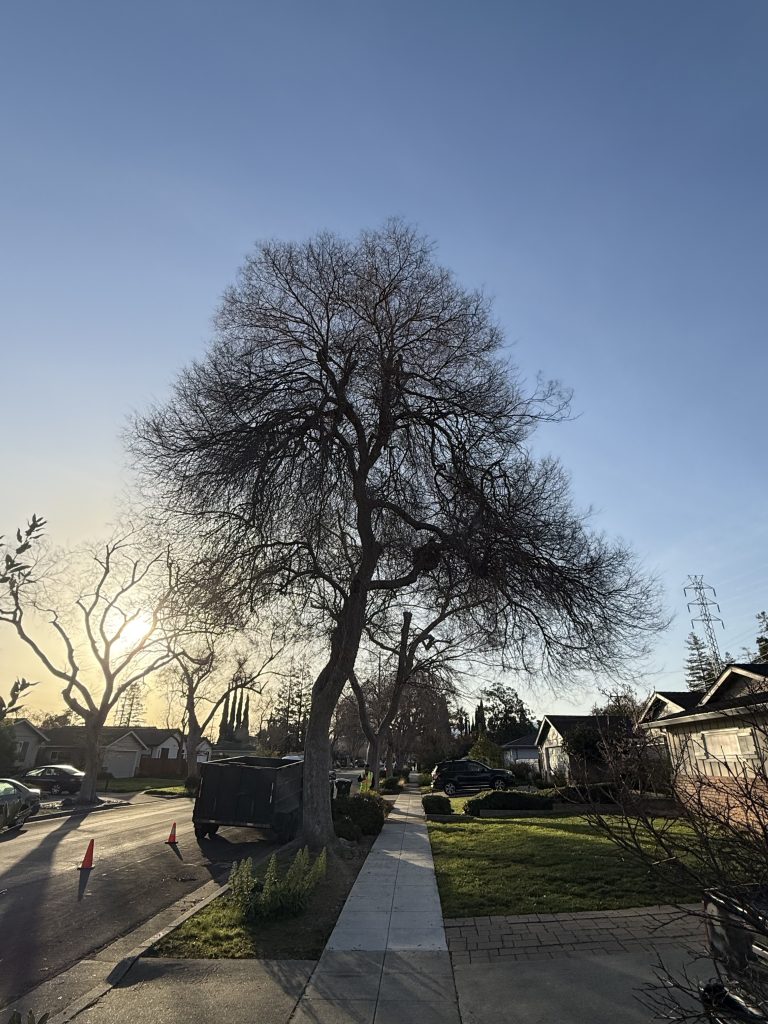
Lighten Dark Tree Canopies Without Harsh Overcutting
Dense canopies can turn a bright yard into a shaded, damp space, especially when branches weave tightly and trap moisture. Thinning focuses on internal congestion so light filters through, and the canopy feels balanced, not chopped. It can cut down on cluttered growth that hides windows and lighting. The right approach also reduces small deadwood that drops during windy days.
Common struggles we hear include:
- Yards that stay dark and slow to dry after watering or rain
- Worry about heavy limbs over cars, roofs, and walkways
- Constant litter from crowded growth and weak twigs
When past work went wrong, it’s usually because too much interior growth was removed too fast. With crown thinning in San Jose, CA, we avoid the “hacked” look by spacing cuts, protecting leaf cover, and keeping the canopy evenly distributed.
Solar owners often call when panels lose output from thick foliage. In these cases, tree crown thinning in San Jose, CA, can help when shading is caused by density rather than the tree’s height. We thin with a goal-based plan, so you gain exposure without losing the tree’s natural silhouette.
Tight neighborhoods bring another challenge: homeowners want more clearance and light, but not a bare tree that feels exposed. Our tree crown thinning service in San Jose is designed to improve comfort and safety while keeping a consistent, lived-in look across the property.
See If Tree Crown Thinning Is Right for Your Yard
Crown thinning works best when you want a brighter yard but like the tree’s size and shade. It’s a practical fit for homeowners, HOAs, and managers who need cleaner canopies without a height change. The key is matching the thinning level to the species and site exposure.
Good candidates for this service include:
- Families wanting safer play areas and patios under lighter canopies
- Solar homeowners aiming for better sun reach without major size cuts
- Landlords and managers reducing risk while improving curb appeal
- Commercial sites improvi visibility and comfort outdoors
If you’re aiming for the best crown thinning in San Jose, CA, ignore common myths. Thinning does not mean cutting the tree way back; it reduces density, not size. More thinning is not always better, because over-thinning can lead to sun stress and weak regrowth.
Another misconception is that lion-tailing looks “clean.” In reality, it can shift weight to the ends and raise failure risk, so we keep foliage spaced throughout the canopy. We thin with purpose. When you get tree crown thinning in San Jose, CA, expect an explanation of what thinning can solve and what needs a different plan, like structural pruning or crown reduction.
For homeowners searching for tree crown thinning services near San Jose, CA, we protect plants, manage debris, and leave the canopy balanced. Call Oasis Tree Service to schedule your estimate.
- Oasis Tree Service
Tree Crown Thinning Benefits Our Clients Notice
Clean Tree Work Site and Careful Yard Protection
We protect lawns, roofs, and landscaping with drop-zone planning and tidy haul-away. You get a clean yard, clear walkways, and no leftover piles when the job is done, same day.
Clear Tree Trimming Quotes with No Surprise Fees
We explain what gets removed and why, then price it. With tree crown thinning services in San Jose, CA, you know the plan, timing, and cleanup steps before work begins.
Best Season Timing for Safe Crown Thinning
We schedule pruning around growth cycles and heat exposure to reduce stress. You get healthier leaf cover, fewer scorch issues, and a canopy that responds well over the next season.
- FAQs