- Saratoga CA
Hazardous Tree Removal In Saratoga CA For Safety
Unsafe trees can fail without much warning when trunks are split, roots are weakened, or heavy limbs start hanging over active areas. At Oasis Tree Service, we handle hazardous tree removal by focusing first on tree condition, site access, and the risk to nearby structures. This type of work is different from standard pruning because the tree may already be unstable before any cutting begins. Our team provides hazardous tree removal services in Saratoga CA, for trees that threaten homes, driveways, sidewalks, fences, and utility areas.
We also manage hazardous tree removal in Saratoga CA, when a tree shows advanced decay, storm damage, or major structural weakness. These jobs often involve dead trees, cracked trunks, broken tops, and severe leaning caused by poor root support or changing soil conditions.
Here are the main hazardous tree conditions we address during removal planning:
- Severe Lean and Root Failure
We remove trees that lean beyond safe angles or show root damage, soil movement, or weak anchoring, because these conditions can quickly lead to collapse. - Dead or Dying Tree Sections
We inspect brittle wood, dead tops, and failing limbs that can break suddenly, making dead tree removal in Saratoga CA, necessary for safety. - Storm and Lightning Damage
We handle damaged tree removal in Saratoga CA, when wind, rain, or lightning leave trees cracked, broken, or unstable after severe weather. - Cracks, Splits, and Utility Risks
We provide hazardous tree removal service in Saratoga for split trunks, major cracks, and trees touching lines, creating urgent removal needs near structures.
This is why our removal process requires clear evaluation, controlled removal steps, and direct action based on the tree’s actual condition.
Safe Hazardous Tree Removal Methods That Reduce Risk
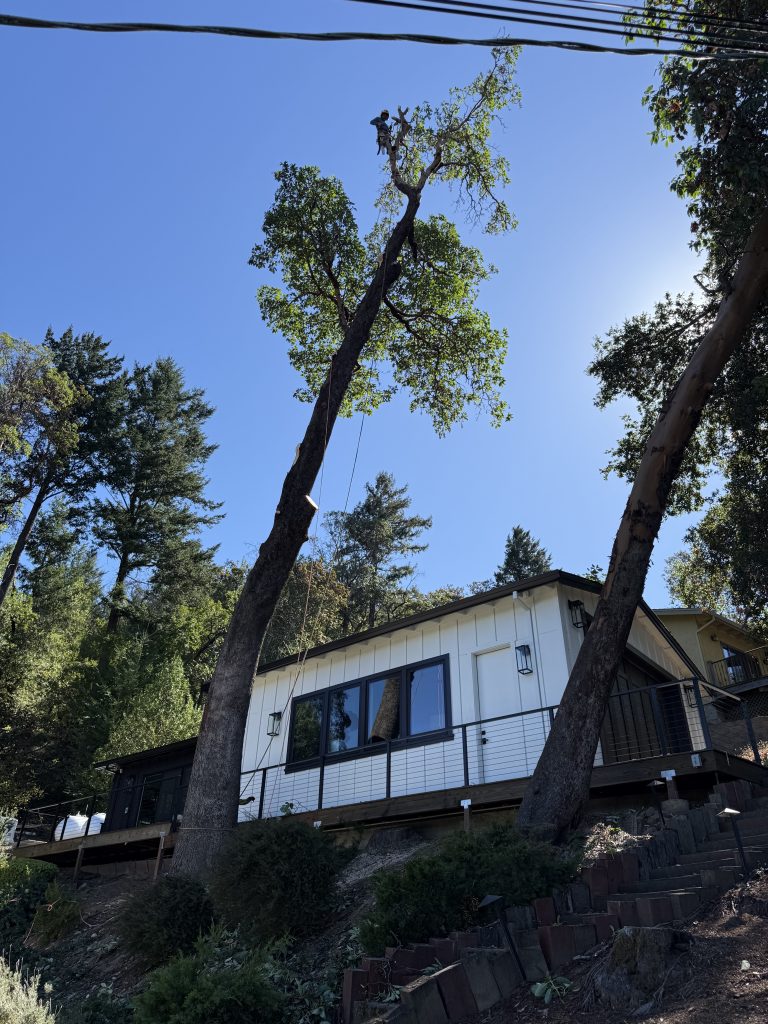
Removing a dangerous tree safely depends on where it stands, how unstable it has become, and what sits around it. We plan each hazardous tree removal job based on height, weight distribution, access limits, and the chance of sudden movement during cutting. At Oasis Tree Service, we use different methods when trees are close to homes, garages, fences, patios, and neighboring property lines.
We offer hazardous tree removal in Saratoga CA, with a focus on dismantling the tree section by section when the space is tight or when the structure is too unstable for a full fall. Rigging systems help us lower heavy limbs in a controlled way instead of letting them strike roofs, pavement, or landscaping. For larger trees, crane-assisted support can help move unsafe sections safely. We also use climbing or aerial lift access when careful overhead cutting is needed in confined spaces. When open space allows it, directional felling may still be used.
Warning Signs Your Saratoga Tree Has Become Hazardous
A tree often shows visible warning signs before it fails, especially when it leans toward structures or begins losing support at the base. We handle hazardous tree removal when these conditions place daily activity, nearby property, or access areas at risk. At Oasis Tree Service, we look at how the tree affects roofs, driveways, parked vehicles, walkways, and surrounding trees. Our hazardous tree removal services in Saratoga CA, are often needed when changes in the trunk, branches, or root zone suggest the tree may not remain stable through wind, rain, or seasonal stress. These site problems vary from one property to another, so we adjust the work to fit each layout.
Here are common situations that often show when hazard tree removal in Saratoga CA, becomes necessary:
- Leaning Toward Structures
We often remove trees that tilt toward homes, garages, or fences because continued pressure, shifting weight, and root weakness can increase the chance of collapse. - Branches Over Active Areas
We address limbs hanging above roofs, driveways, patios, and walkways because weak attachments or excess weight can lead to sudden branch failure overhead. - Visible Ground Movement
We check for lifted roots, cracked soil, and ground heaving near the base, since these signs often show that the tree is losing support. - Storm-Hung Broken Limbs
We remove partially detached limbs left after storms because they may stay suspended briefly, then fall later onto people, vehicles, or surrounding structures.
These conditions explain why our hazardous tree removal service in Saratoga helps reduce ongoing risk and allows us to respond to different property layouts with a practical removal plan.
- Oasis Tree Service
Trusted Hazardous Tree Removal Experts
Hazardous Tree Removal Around Occupied Buildings
We understand how stressful it feels when an unsafe tree stands over your driveway, entry path, or family space. We plan tree removal around active properties so daily movement is affected as little as possible.
Handling Hazardous Trees Threatening Neighboring Lots
We know dangerous trees do not stop at property lines when heavy limbs hang over fences, shared access, or nearby structures. We approach tree removal with care for boundary risks that can strain neighbor relationships quickly.
Avoiding Failure In Hazardous Tree Removal
We know hazardous tree removal cannot rely on guesswork when a trunk is split, weight is shifting, or the base is giving out. We plan around likely failure points first, so the most unstable parts are addressed early.
- FAQ
Key Facts About Hazardous Tree Removal Safety
Yes. Green leaves do not always mean the tree is safe. A tree can still have internal decay, a hollow trunk, weak unions, or failing roots that make sudden breakage far more likely.
Yes. During hazardous tree removal, restricted zones help protect people, pets, vehicles, and nearby structures. Keeping clear of active cutting and lowering areas allows the crew to control falling sections without interference.
Cost usually depends on tree height, degree of instability, access limits, nearby structures, wood weight, and disposal needs. A severely damaged tree in a restricted space usually takes more labor and care.